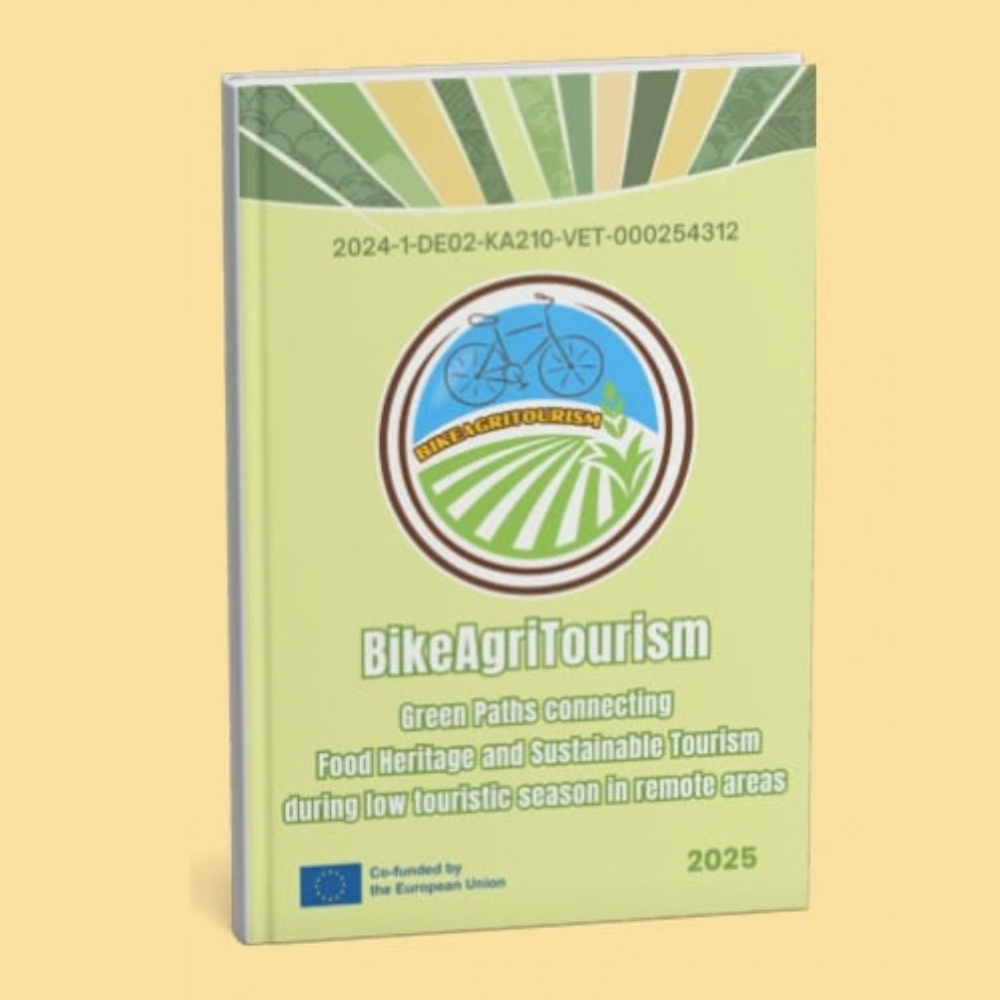
The BikeAgriTourism Manual is a practical and forward-looking guide to creating more sustainable, inclusive, and engaging tourism experiences in rural areas. Developed in 2025 within the EU-funded BikeAgriTourism project under the Erasmus+ programme, the manual explores how agritourism and cycling tourism can work together to create “green paths” that connect agricultural landscapes, local food traditions, cultural heritage, and active travel.
Across its 121 pages, the manual offers a clear combination of strategic guidance and hands-on advice for agritourism operators, tourism professionals, cycling businesses, and Vocational Education and Training (VET) providers. It shows how collaboration between farms, rural accommodation providers, bike rental companies, guides, and local tourism stakeholders can generate new opportunities for sustainable economic development, particularly in remote destinations and during the low tourist season.
The publication covers the full journey from concept to implementation. Readers are introduced to the benefits of combining agritourism and bike tourism, the regulatory context for developing such activities in Greece, the technical equipment needed for safe rural cycling experiences, and essential emergency-management procedures. Particular attention is also given to accessibility, with practical approaches for making bike tourism more inclusive for people with disabilities.
The final section brings these ideas to life through the Greek experience, presenting methods for identifying and developing suitable green routes for AgriBike tours. This case-based approach demonstrates how cycling itineraries can become meaningful connections between visitors, landscapes, agricultural production, and local communities.
Accessible, practical, and rooted in sustainability, the BikeAgriTourism Manual is a valuable resource for anyone seeking to design tourism experiences that encourage slower travel, strengthen rural economies, promote environmental responsibility, and help visitors discover destinations through authentic encounters with local land, food, and culture.